It was one of those regular Thursday evenings, so I thought. I was done with my hustle for the day. But I wasn’t heading home just yet, I had to rush to Alliance François! No, I was neither going to take French lessons nor watch French plays, I was up for something else. An event organized and facilitated by Heinrich-Böll-Stiftung. Despite being principled, I also keep an open mind. So that’s why I was there by the gate 5 minutes late but wearing an enthusiastic face. I quickly registered my details by the ushers’ desk, picked a brochure in the process then walked in into the semi-lit auditorium. The mood seemed set, this was it!
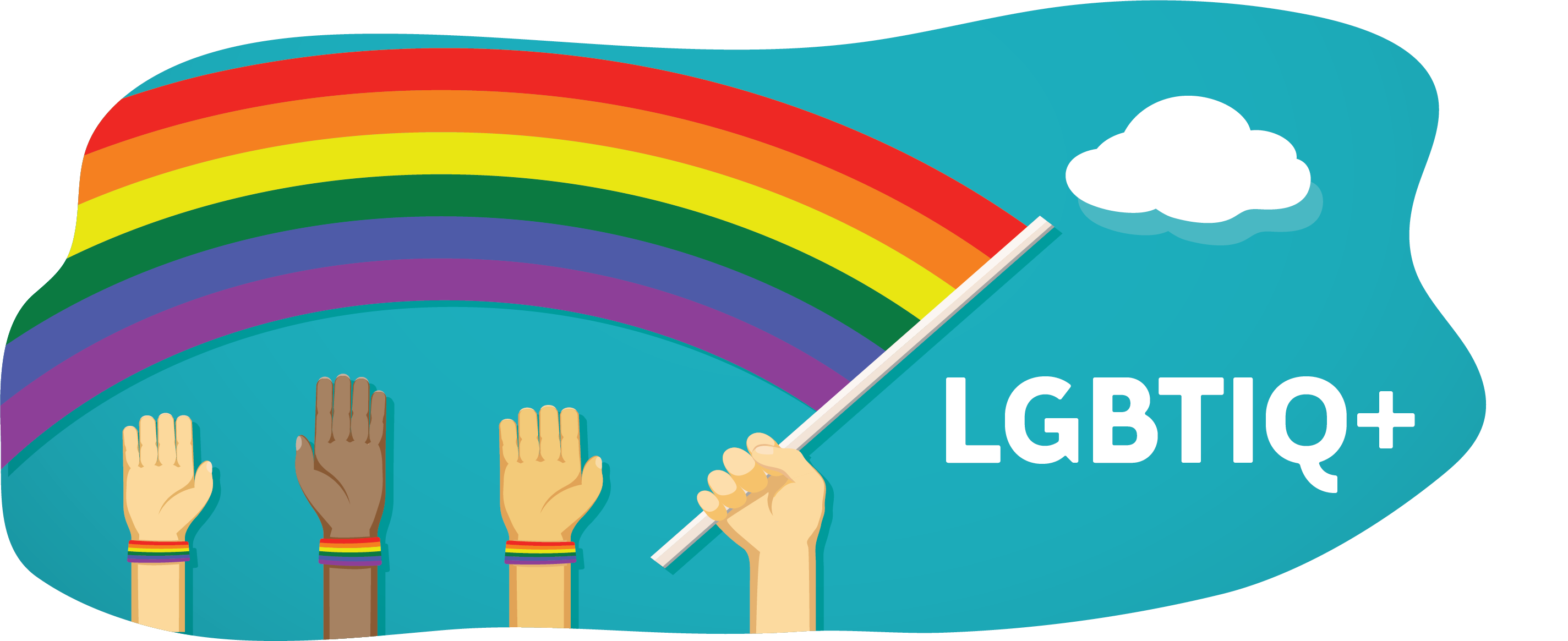
I had gotten the invitation sent to me earlier via email, and I just skimmed through it. The email highlighted an event about LGBTQ community in Kenya by then. But as I write this, the community has expanded to more letters, LGBTIQ+, as more classes have be included. I hope I haven’t excluded any letter, if I have my apologies. I suppose more letters will be added even further since more classes are now emerging.
By then an International Relation student, I thought the event was relevant in my field of studies. With little preparation, I was a blank book ready to soak up as much information dished out in the event as possible.
In my innocence, I was only aware of existence of gay and lesbians being subtle mainstream in Africa if not Kenya. The rest of what the letters symbolised, I knew were only a western world’s reality, so I thought! I settled down, just in time for the discussion to commence. The moderator introduced himself and the panellist. It was at that moment that I had my first rude awakening on this matter!
LGBTIQ+ just to clear things up in a layman’s language, are people who have identified themselves as lesbian, gay, bisexual, transgender, intersex, or questioning. We will narrow in on the above terminologies later on.
But first, it’s time you knew that sexual orientation and gender identity/expression are related, but they are also separate and distinct. I know most of us are taking this terminologies seriously for the first time since we have so far never needed to.
To begin with, sexual orientation is a persistent emotional, romantic, sexual or affectionate attraction towards another person. It is easily distinguished from other components of sexuality including biological sex, gender identity-the psychological sense of being male or female; and the social gender role-adherence to cultural norms for feminine and masculine behaviour. That’s a mouthful, take your time to process!
In addition, sexual orientation exists along a continuum that ranges from being solely gay or lesbian to being utterly straight and includes various forms of bisexuality. Sexual orientation is different from sexual behaviour because it refers to feelings and self-concept. Persons may or may not express their sexual orientation in their behaviours.
Gender Identity/Expression/Presentation on the other hand, is how people see themselves in terms of gender (e.g., male, female, or something else). This is an internal identity rather than a physical one. A person’s gender identity might not match their body, presentation, or expression. For a long time those individuals who happened to have identified as something other than what their physical or biological make up represented were considered mentally ill. And even once classified as so by WHO. Despite being removed from the mental health classification, it is still a hot topic of debate and contention.
To simplify, gender expression, is everything a person does to communicate their gender to others. This includes: clothing, hair styles, mannerisms, way of speaking, adornment, etc. Gender expression can vary for an individual from day to day or in different situations, but most people have a range of expression that makes them feel most comfortable.
I hope the definitions have not confused you! Mental trick: Gender expression is to how you view yourself sexually, like are you a man/female or other while sexual orientation is feeling and self-concept, like are you sexually attracted to male, female or both!
In case you are wondering why I was shocked in the first place at the event! It happened to be the panellists! They were a constitution of lesbian/gay, bisexual, transgender and intersex. They were all beautiful and handsome in equal measure. There were these four transgender persons that really caught my attention, actually shock my entire system!
For the two who Trans-females (male to female) who identified as females were physically feminine, having curves in the right places and had nicely done makeup and hair. For the Trans-males (female-male), they were masculine, built and muscular and well groomed. I was extremely startled how that was possible. Like how did they transform themselves to look exactly like the opposite gender… in my mind, this did not add up. I was exposed to a reality that I had never envisioned. A million questions were rushing through my mind just to understand and also to imagine the body look physically.
I was still oblivious of gender reorientation therapies, hormones suppression and administration, and even gender reorientation surgeries. That these procedures would physical transform a person to look like a different gender from their biological ones!
For your sake, let’s dive in into more terminologies in the hope that it would drive away some confusion and answer the many questions you might be asking yourself right now.
Heterosexuality is the sexual orientation in which a person is attracted (affectionately, sexually, and romantically) to partners of the opposite sex. This is sometimes referred to as being “straight.” This has been considered the natural orientation that a normal person should conform to. But things have longed changed!
Homosexuality is the sexual orientation in which a person is attracted (affectionately, sexually, and romantically) to partners of the same sex. It does not include bisexual, transgender, or intersex people. This is what is commonly referred to as gays and lesbianism. This was one of the first group to fight for acceptance and recognition by the society. And has so far been accepted mostly in western cultures and even widely popularized by pop culture. Even though they exist in Africa, they are yet to be accept as a normal since the practices is still mostly a taboo in African cultures.
Bisexuality is a sexual orientation in which people are attracted to partners of the opposite sex as well as partners of the same sex. Bisexual people have often faced discrimination even within the LGBTIQ community. There are those who believe that bisexuals are in denial and are actually gay or lesbian. To avoid discrimination most bisexuals prefer sticking to heterosexual part of the spectrum!
When a person is in the process of exploring their sexual orientation, they may choose to identify as Questioning. This can be done consciously or not. Most people are still not aware of this orientation because it’s neither here nor there, confusing to most people!
Transgender or simply ‘trans’ which has and is still a big topic of debate, is an umbrella term used to describe those who transcend conventional expectations of gender identity or expression. Like any umbrella term, many different groups of people, with different histories and experiences, get associated within the greater trans community – such groups include, but are certainly not limited to, people who identify as transsexual, genderqueer, gender variant, gender diverse androgynous, etc.
Trans’ people still face the challenge of being referred to as mentally ill persons. Young children being placed on hormonal suppression drugs and some taken for gender reorientation surgeries. Has been a sources of lots of controversies, and ethical issues.
Cross Dressers are neither new nor strange to most of us. These are straight-identified males who wear women’s clothes and/or make-up. They do not identify themselves as transgender. The motivations for cross dressing vary, but most cross dressers enjoy cross dressing and may experience pleasure and comfort from it. These people are typically satisfied with their biological gender.
Drag Queens/Kings on the other hand, unlike cross dressers, are gay men who dress in female clothing for the purpose of performance are not necessarily transgender individuals. The choice that these individuals make to dress in the clothing of the opposite sex is not typically a matter of gender identity.
The same is true of drag kings (i.e., women who dress in men’s clothing) and male impersonators.
As for Genderqueer individuals, they are people who view their gender identity as one of many possible genders beyond strictly male or female. Such people feel they exist psychologically between genders or beyond the notion of only male and female. People who feel this way may or may not pursue hormone therapy and/or surgical body modification and sometimes prefer using gender-neutral pronouns (e.g. “ze,” hir”). Some people prefer this label because it is a rejection of traditional gender labels. Related terms include: gender fluid, gender neutral, bi-gendered, androgynous, or simply gender diverse.
Countries like Canada and US from resent years having been facing a lot of issues when it came to using gender pronouns. Some people have been arguing that the several additional gender-neutral pronouns are adding confusion and complex to an otherwise simple communication skill. They go further to argue that its very difficult to tell what a person want to be referred to us until it’s too late, you’ll have already utter the pronoun. And the fact that these counties are try to push into law legislations that will force people to use this ‘made-up’ pronouns, is not going well with these some people.
For Intersexed people, they are born with aspects of both female and male genitalia, often referred to as “ambiguous biological sex characteristics.” This is purely biological occurs, and this individuals have for a long time been called a freaks of nature. But with the emergence of better medical care and surgery, they are able to choose what to be. Intersexed people may later grow up to have gender identities that are the opposite of the “manufactured” sex constructed for them at birth and have feelings similar to transgender in.
As the world progresses so should we. Let’s allow people to excise and express themselves as they wish freely. As we do this, let’s also not force people into things they are not into or against their beliefs under the pretext of progression. As long as they are not undermines other people’s rights and freedom of expression. It is a free world let it be truly fee to all!
So as you can see now, it turned out to be not so regular Thursday! I have never looked at the rainbow the same way as before!

 belinenyangi'sdiscussion#oursociety#