Being a Refugee in the Middle of a Global COVID-19 Pandemic

The date was 15, March 2020, just a few days after the first official COVID-19 case was announced in Kenya. We are glued to our devices anxiously watching our president, Uhuru Kenyatta, gives directives! This was the first steps towards shutting down the country to help curb spread of this novel virus. Travel from any countries with any case of the virus was restricted. Only Kenyan citizens, and any foreigners with valid residence permits was to be allowed into the country provides they self-quarantine. All schools and higher learning institutions were to be closed by March 20. Government and businesses people were to start working from home; except essential services. Cashless transactions over cash. No congressional meetings- weddings, malls, night clubs, churches, limitation of hospital visits. Hospitals and shopping malls to give soap and water/hand sanitizers, and regular cleaning facilities. These were among the first directives given with more stringent directives to follow as we counted more days and more numbers into the pandemic.

The cases rose steadily but way below the projections. By June 6 we had only 2,474 recorded case of the virus in the county. The suspicion was that there were more cases of people with the virus walking around potentially spreading it unawares. This is due to the fact that majority of the cases were asymptomatic, they exhibited mild to no symptoms at all. At this time we had lost 79 people to the virus and had a total recovery of 643. The president decided to extend the directives on cession of movements to and from worst affected regions- Nairobi Metropolitan Area, Mombasa County and Mandera County.

To compliment what the government was doing, serval organizations and enterprises chirmed in to offer assistance. This came in the form of financial support, sanitation facilities to ensure that there was regular washing of hands, provision masks, soap, hand sanitizers and food baskets, and sensitization of preventive measures.

I watched, observed and learned how the pandemic was quickly unfolded and racking havoc into every inch of the fabric of our society. “What is going to happen to those individuals whose situations wouldn’t allow them to follow the WHO guidelines” I pondered helplessly. “What about the slum dwellers? How would they afford the ‘luxury’ of social distancing?” Majority of these people live on hand to mouth, they have to work daily to get something to fill their belly. How was ‘work from home’ directive supposed to apply for them? There were two choices here; stay at home and die from starvation or risk your life and get some food for your family. Honestly speaking, this wasn’t even a dilemma!

As for the refugees who I worked with, the situation was even dire! A few, their already bad situation were made worse and couldn’t take it anymore and decided to end it. This was the case of a refugee who committed suicide just next to UNHR office. Sources claimed that he wasn’t able to fend for himself despite all the effort he had made driving him to depression. So death was the way out. How tragic! There has been a reported surge in suicides during this period, however it is not attributed fully on the pandemic.

Put yourself in a refugee shoe for a moment! You fled your country due to a well-founded fear. You ran away from a civil war or famine in your country- say South Sudan, Somalia, Ethiopia or even DRC Congo. In your country of aslum, you are barely surviving. Securing a formal job is just a distant dream in your head. You don’t have papers that is the first problem beside the subtle discrimination you constantly face. But if you are lucky to get any form of job, you are vulnerable to exploitation. Besides some of your employers might feel they are just doing you a favour. Above and beyond, there is little you can do. You are just a helpless foreigner with no say! Doing business is also difficult, remember you have no papers. Getting a permit is impossible so you have to operate illegally. This means that you’ll have to pay hefty brides. At the end of the day regardless of your employment choice, you’ll get paid peanuts. Then COVID strikes amidst all this relaying challenges!

Eastleigh-Nairobi, a place where a good number of households are Somali refugees was suddenly shut down. Without warning. All the businesses were closed, no more work, nowhere to go in a foreign country. In just a few days you’ll have depleted all your surplus. You’ll have to face two monsters; the virus and starvation. Just when you thought there was an alternative, you get hit by reality. You can no longer seek odd jobs in people houses for a few coins or in exchange for food. Moreover people being extremely cautius of the virus, they fear letting strangers into their homes during this period. Everything seem at a standstill- the barbershops, hair salons, the local pub, local eateries, and local boutiques. All possible source of livelihood!  If it hard for native citizens what about a refugees, migrants and asylum seekers who depend on locals?

 Most refugees and migrants depend on daily wages to get by. They do not have access to proper social security schemes which can cover them during these hard times. Thus income loss renders refugees and migrants incredibly vulnerable. As a result, the impacts would be the inability to afford basic goods, increased worry and anxiety, inability to pay remittances, and inability to continue their migration journey. In orders to survive, some have resorted to negative coping strategies, such as selling their clothes and phones.

As refugees and migrants increasingly struggle to make ends meet, the consequences are also felt by their families and communities in countries of origin. Most of these refugees still send money back home to their relatives or friends who stayed behind. The World Bank estimates that global remittances will fall by 20% in 2020 due to the economic downturn triggered by the coronavirus pandemic and migrant workers’ loss of income and jobs.

For the few lucky refugees who had been getting support from NGO’s and individuals. This support has either been reduced immensely or cut off entirely! The NGO’s themselves have been struggling to stay afloat during this period too. The shift in focus due to the crisis has resulted into majority of the donors reducing their fundings or withdrawing their support entirely. This is how far the ripple effect of what Covid-19 has bought us. Beyond the immediate health crisis, COVID-19 has also severely impacted the world economy, and economic recovery is expected to be slower than anticipated.

The biggest perceived barriers to health services cited by surveyed refugees and migrants differ between regions but overall relate to lack of funds, not knowing where to go, and discrimination against foreigners. It has been feared that the vulnerability of refugees and migrants to the coronavirus would be exacerbated by barriers to health services. For refugee camps, a COVID-19 outbreak could exhaust the already inadequate medical resources and overwhelm camp hospitals like Dadaab and Kakuma refugee camp.

Since the beginning of the public health crisis there have been concerns around whether refugees and migrants can adhere to recommended measures to help prevent transmission of the virus. As many along various stages of their journey may find themselves residing in camps, shelters, or detention centres, and facing overcrowded and insanitary conditions. Such places adhering to the recommendations is far from practical. So in a scenario where Covid hits-which is not a matter of ‘If’ but ‘when’- it’s going to be a mess!

Unsurprisingly, more and more surveyed refugees and migrants have also reported increasing stress and anxiety. As refugees and migrants lose their incomes, many seem to be faced with the dangerous choice between poverty and illness.

The refugees on transit from their home countries haven’t been spared at all with the pandemic. Getting to their destination country to seek asylum has gotten twice as difficult. A part from just the fear of contracting COVID-19 along the way, most of the countries have closed their borders in the bid to curb the virus. This has come with it the opportunity for exploitation by the boarder officers. Most migrants would be willing to pay all they have just to be allowed in.

In addition, for those who manage to get in, they are likely to face a much more pronounced discrimination than they would have faced before the pandemic. Since as a foreigner you are constantly under suspicion of carrying the deadly virus. The result is potential outbreak of a second virus, xenophobia.

For those refugees who were lucky to be among the quota set to be resettled in a third country (western countries), things haven’t worked out as planned either. Due to the current state of affair, this arrangement has halted for now. Their fears and anxieties are real, for they feel that their only chance of turning a new leaf might just have been dusted. Even worse, some had even sold their households items and ready to depart but Covid-19 happened. What keeps them is hope that this current status will be dealt with and they can finally depart.

There is dare need for assistance to refugees. Food to eat, a place to reside, and healthcare for a start is basic need for them at this point. Moving forward, countries should looking into their policies to allowing refugees to have equally access to training, job and business opportunities. For people within work age bracket, they should. This will not only benefit them in terms of earning a living and feeling socially secured but it will also be a plus to the country since they will contribute to the growth of our economy.

With these struggles, I believe there are some refugees who thinking of returning back home. They feel that maybe there they would be in a position to meet their daily needs. This despite still having the well-founded fears of persecution. They feel they are still undergoing the same torture through hunger, deteriorating health, homelessness and anxiety which might lead to depression, illness and even death. However going back is equally hard due to the closed borders. On the other hand not being able to afford acquire COVID-19 certificate for international travels. The issue of documentation is equally key when crossing across border which for sure most lack. Majority are thus risking unpleasant detention and deportation in this attempt. So clearly this is also a dead zone to explore.

With a prolonged COVID-19 pandemic in sight, we expect further deteriorating of socio-economic conditions, protracted displacement and the critical shortfall in solutions to displacement are leading to widespread despair among refugees. Many refugees say they see their futures crumbling. The issues that drove them from their countries remain unresolved and they can’t return home. Many who have survived in exile by eking out a living in the informal economy have lost their jobs. They are also anxious about their health and that of their families, not knowing when the pandemic will end and how they can really protect themselves. They see a lack of solutions and lack hope in the future.

In the mix of all these, millions of refugees worldwide are still exposed to violence, family separation, culture loss and exile. The COVID-19 has further exposes these populations to a new threat, one that could prove to be more devastating than the events forcing them to flee their homelands. Moreover, just as I had highlighted earlier, the COVID-19 pandemic has strained the finances of governments, nongovernmental organizations and humanitarian agencies that serve refugees.

Despite COVID-19 pandemic exposing systems of inequality, it was still met with delayed responses by public health authorities to address the needs of the most vulnerable. Humanitarian agencies serving refugees emphasize the importance of global support for the receiving countries so they can continue their efforts of solidarity, medical care and economic support. Hence, I strongly endorse The Lancet’s guiding principle of public health networks leaving no one behind during the COVID-19 pandemic. Recommending epidemiologic risk assessments and the timely deployment of outbreak response teams within refugee camps, promoting health education in a culturally sensitive manner and ensuring healthcare access without refoulment for refugees.

Pan-African Conference-Memoire (August 2015)

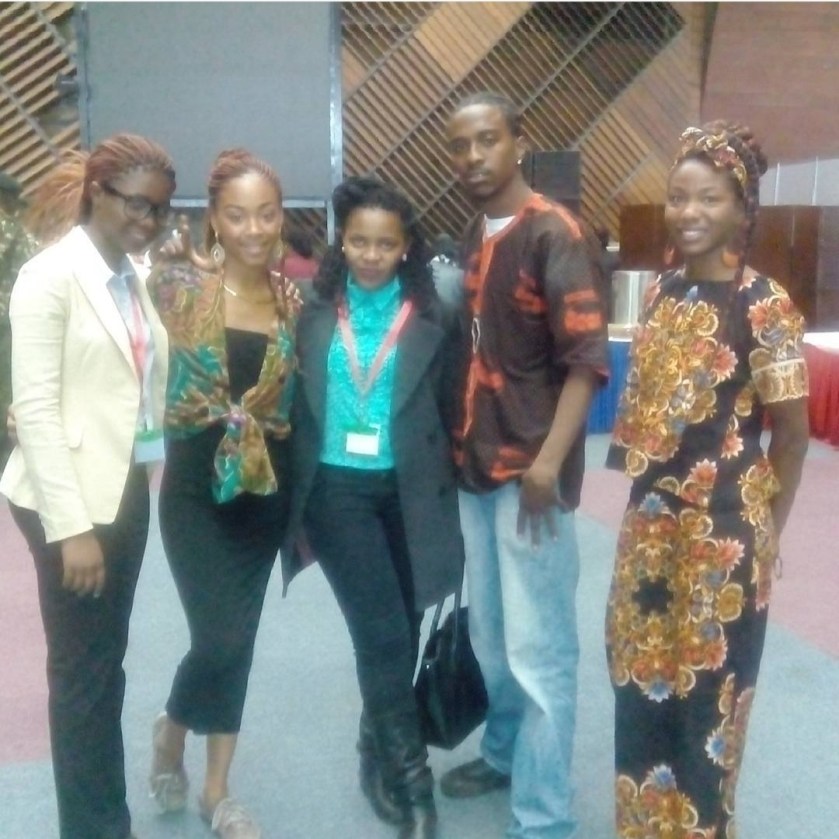
I was so excited that I was part of the team that was coordinating and facilitating the Pan-African conference. This was so fulfilling in all angle. One it was fulfilling being that I was an IR student, this was so relevant to my course, and I was getting an opportunity to have a physical feel of diplomacy, integration, foreign policy and many other aspect of my course. I was going to interact with diplomats, Head of States, dignitaries, politicians, fellow like-minded people who inspire to advance their career in the IR world. Secondly, I was being paid for the services that I will be offering. I had already planned for that cash. Apart from spending the money in getting myself new outfit, the most valuable thing I used that money for was to apply for my Kenyan passport. A diplomat in the making must have a passport!

The other exciting bucket list that I was checking was the fact that I was going to spend a whole week in a five star hotel. I had such an amazing experience. And to make it even sound more enjoyable is the fact that I had earned it. Like it was through my appointment to facilitate the event that had earned me such an opportunity. You clearly don’t know how many offers I turned down from ‘men’ offering to take me to Kepinski and the likes and even vacation to the coast. I really wanted to have those experiences but I just could not allow myself to have it from them. I did not want to feel vulnerable to someone. I always convinced myself that I will afford and earn those experiences through my hard work. I would constantly repeat to myself “it is just a matter of time and I will be able to afford all the luxury that life has to offer. But for now, I am contented with my life as it is.”

Like they say, your network is your net worth. I was eager to create a great network during the conference. I had also challenged myself that I will participate during the conference. This was to have my voice be heard in what I felt that Africa as a continent was doing wrong when it comes to Foreign Policy. My key point was on South-South Relation. I do not embrace it. African countries just blindly adopted the engagement without paying keen attention into the policy of engagement. The Chinese came up with all the rules of engagement and all we did was to ratify it without giving our input. This is a sad affair. We were fooled with the non-interference policy which is not true. By all facts, China, Japan are interfering with our sovereignty as a country, In Kenya, we have given our port as a security for the loan that China has given us. In the construction of different highways, road and even the railway line they are bringing raw materials from their country yet we have the same material in our country. This means we are subjecting our local market to die. They are also carrying labour from their country in the name of expatriate yet we have able engineers and all relevant task force to accomplish the same task. 

I was going to make myself be noticed. I remember during my contribution in one of the forum, one gentleman came telling me that he sees a great potential in me. That I need to just establish what it is and then pursue it. (I wonder why people who normally tell you such kind of statement don’t objectively tell you that this is what you are good at, so work towards it.) You just have to figure it out yourself.

I was also going to face my fear head on. Stage fright. I am still timid when I am communicating to an audience. This is still work in progress, I will soon overcome it and have the confidence while at it.

This has been between me and self. I can’t believe that I am opening up to something that I wanted to be just be known to one. This was the first time I ever stepped at the airport. I had just seen airport on movies and how people hold those boards with name written on it at the…. To pick their visitors. I was the usher in charge of receiving all delegates to the country. I was to pick them to the airport and take them to their respective hotel. This was awesome. I enjoyed the task. I was finally experiencing only what I had seen on moviesJ do not laugh that much, in the same year I did border a flight. I experienced so many blessings in that year.

In my stay at Sarova, I ensured I enjoyed all the facilities they offered. From swimming, the gym, steam and Sauna, to massage and food and all the room services. How will you know that a villager takes an awesome utility of the opportunity offered? I even brought my friends to enjoy the experience with me… Hahaha

During the conference the discussions were on  policies that would ensure that Africa as a continent voice is heard and respected in the International real politics in order to neutralize the forces of neo-liberal globalization, which favours capital and markets. This was to be achieved through strategizing on how to achieve self-advocacy, access to justice, political participation and post-2015 development. There were dialogue on what self-advocacy networks that Africa has, the tools or resources needed to build and sustain self-advocacy networks. In my opinion the event was chaotic to me with nothing amicable that was agreed upon, only battle of ideas. It was full of politics with everyone insisting that their view was to be adopted. There was also no proper means/tool that was established to ensure that the policies would be implemented and also any measure for accountability. Our leaders were just there to be seen with minimal contribution to the discussions. At least I got to take selfie with them huh!

Pan African Congress sought to address issues relevant to Africa today: youth unemployment, the environment, the abuse of women and girls, the continued exploitation of Africa’s resources; the role of the Africa Union in the march towards continental integration, and regional economic blocs. In the era of the social media, the Movement is presented with unique opportunities and challenges to use these platforms to improve communication; re-brand itself in a progressive light and help to create the new Africa. These require new methods of mobilisation to engage as many forces, factions, and groups as possible. The Movement must re-awaken Africa. The movement should speak truth to power.

LGBTIQ: Challenging the cultural norms

It was one of those regular Thursday evenings, so I thought. I was done with my hustle for the day. But I wasn’t heading home just yet, I had to rush to Alliance François! No, I was neither going to take French lessons nor watch French plays, I was up for something else. An event organized and facilitated by Heinrich-Böll-Stiftung. Despite being principled, I also keep an open mind. So that’s why I was there by the gate 5 minutes late but wearing an enthusiastic face. I quickly registered my details by the ushers’ desk, picked a brochure in the process then walked in into the semi-lit auditorium. The mood seemed set, this was it!

I had gotten the invitation sent to me earlier via email, and I just skimmed through it. The email highlighted an event about LGBTQ community in Kenya by then. But as I write this, the community has expanded to more letters, LGBTIQ+, as more classes have be included. I hope I haven’t excluded any letter, if I have my apologies. I suppose more letters will be added even further since more classes are now emerging.

By then an International Relation student, I thought the event was relevant in my field of studies. With little preparation, I was a blank book ready to soak up as much information dished out in the event as possible.

In my innocence, I was only aware of existence of gay and lesbians being subtle mainstream in Africa if not Kenya. The rest of what the letters symbolised, I knew were only a western world’s reality, so I thought! I settled down, just in time for the discussion to commence. The moderator introduced himself and the panellist. It was at that moment that I had my first rude awakening on this matter!

LGBTIQ+ just to clear things up in a layman’s language, are people who have identified themselves as lesbian, gay, bisexual, transgender, intersex, or questioning. We will narrow in on the above terminologies later on.

But first, it’s time you knew that sexual orientation and gender identity/expression are related, but they are also separate and distinct. I know most of us are taking this terminologies seriously for the first time since we have so far never needed to.

To begin with, sexual orientation is a persistent emotional, romantic, sexual or affectionate attraction towards another person. It is easily distinguished from other components of sexuality including biological sex, gender identity-the psychological sense of being male or female; and the social gender role-adherence to cultural norms for feminine and masculine behaviour. That’s a mouthful, take your time to process!

In addition, sexual orientation exists along a continuum that ranges from being solely gay or lesbian to being utterly straight and includes various forms of bisexuality. Sexual orientation is different from sexual behaviour because it refers to feelings and self-concept. Persons may or may not express their sexual orientation in their behaviours.

Gender Identity/Expression/Presentation on the other hand, is how people see themselves in terms of gender (e.g., male, female, or something else). This is an internal identity rather than a physical one. A person’s gender identity might not match their body, presentation, or expression. For a long time those individuals who happened to have identified as something other than what their physical or biological make up represented were considered mentally ill. And even once classified as so by WHO. Despite being removed from the mental health classification, it is still a hot topic of debate and contention.

To simplify, gender expression, is everything a person does to communicate their gender to others. This includes: clothing, hair styles, mannerisms, way of speaking, adornment, etc. Gender expression can vary for an individual from day to day or in different situations, but most people have a range of expression that makes them feel most comfortable.

I hope the definitions have not confused you! Mental trick: Gender expression is to how you view yourself sexually, like are you a man/female or other while sexual orientation is feeling and self-concept, like are you sexually attracted to male, female or both!

In case you are wondering why I was shocked in the first place at the event! It happened to be the panellists! They were a constitution of lesbian/gay, bisexual, transgender and intersex. They were all beautiful and handsome in equal measure. There were these four transgender persons that really caught my attention, actually shock my entire system!

For the two who Trans-females (male to female) who identified as females were physically feminine, having curves in the right places and had nicely done makeup and hair. For the Trans-males (female-male), they were masculine, built and muscular and well groomed. I was extremely startled how that was possible. Like how did they transform themselves to look exactly like the opposite gender… in my mind, this did not add up. I was exposed to a reality that I had never envisioned. A million questions were rushing through my mind just to understand and also to imagine the body look physically.

I was still oblivious of gender reorientation therapies, hormones suppression and administration, and even gender reorientation surgeries. That these procedures would physical transform a person to look like a different gender from their biological ones!

For your sake, let’s dive in into more terminologies in the hope that it would drive away some confusion and answer the many questions you might be asking yourself right now.

Heterosexuality is the sexual orientation in which a person is attracted (affectionately, sexually, and romantically) to partners of the opposite sex. This is sometimes referred to as being “straight.” This has been considered the natural orientation that a normal person should conform to. But things have longed changed!

Homosexuality is the sexual orientation in which a person is attracted (affectionately, sexually, and romantically) to partners of the same sex. It does not include bisexual, transgender, or intersex people. This is what is commonly referred to as gays and lesbianism. This was one of the first group to fight for acceptance and recognition by the society. And has so far been accepted mostly in western cultures and even widely popularized by pop culture. Even though they exist in Africa, they are yet to be accept as a normal since the practices is still mostly a taboo in African cultures.

Bisexuality is a sexual orientation in which people are attracted to partners of the opposite sex as well as partners of the same sex. Bisexual people have often faced discrimination even within the LGBTIQ community. There are those who believe that bisexuals are in denial and are actually gay or lesbian. To avoid discrimination most bisexuals prefer sticking to heterosexual part of the spectrum!

When a person is in the process of exploring their sexual orientation, they may choose to identify as Questioning. This can be done consciously or not. Most people are still not aware of this orientation because it’s neither here nor there, confusing to most people!

Transgender or simply ‘trans’ which has and is still a big topic of debate, is an umbrella term used to describe those who transcend conventional expectations of gender identity or expression. Like any umbrella term, many different groups of people, with different histories and experiences, get associated within the greater trans community – such groups include, but are certainly not limited to, people who identify as transsexual, genderqueer, gender variant, gender diverse androgynous, etc.

Trans’ people still face the challenge of being referred to as mentally ill persons. Young children being placed on hormonal suppression drugs and some taken for gender reorientation surgeries. Has been a sources of lots of controversies, and ethical issues.

Cross Dressers are neither new nor strange to most of us. These are straight-identified males who wear women’s clothes and/or make-up. They do not identify themselves as transgender. The motivations for cross dressing vary, but most cross dressers enjoy cross dressing and may experience pleasure and comfort from it. These people are typically satisfied with their biological gender.

Drag Queens/Kings on the other hand, unlike cross dressers, are gay men who dress in female clothing for the purpose of performance are not necessarily transgender individuals. The choice that these individuals make to dress in the clothing of the opposite sex is not typically a matter of gender identity.

The same is true of drag kings (i.e., women who dress in men’s clothing) and male impersonators.

As for Genderqueer individuals, they are people who view their gender identity as one of many possible genders beyond strictly male or female. Such people feel they exist psychologically between genders or beyond the notion of only male and female. People who feel this way may or may not pursue hormone therapy and/or surgical body modification and sometimes prefer using gender-neutral pronouns (e.g. “ze,” hir”). Some people prefer this label because it is a rejection of traditional gender labels. Related terms include: gender fluid, gender neutral, bi-gendered, androgynous, or simply gender diverse.

Countries like Canada and US from resent years having been facing a lot of issues when it came to using gender pronouns. Some people have been arguing that the several additional gender-neutral pronouns are adding confusion and complex to an otherwise simple communication skill. They go further to argue that its very difficult to tell what a person want to be referred to us until it’s too late, you’ll have already utter the pronoun. And the fact that these counties are try to push into law legislations that will force people to use this ‘made-up’ pronouns, is not going well with these some people.

For Intersexed people, they are born with aspects of both female and male genitalia, often referred to as “ambiguous biological sex characteristics.” This is purely biological occurs, and this individuals have for a long time been called a freaks of nature. But with the emergence of better medical care and surgery, they are able to choose what to be. Intersexed people may later grow up to have gender identities that are the opposite of the “manufactured” sex constructed for them at birth and have feelings similar to transgender in.

As the world progresses so should we. Let’s allow people to excise and express themselves as they wish freely. As we do this, let’s also not force people into things they are not into or against their beliefs under the pretext of progression. As long as they are not undermines other people’s rights and freedom of expression. It is a free world let it be truly fee to all!

So as you can see now, it turned out to be not so regular Thursday! I have never looked at the rainbow the same way as before!