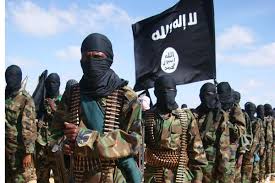
“Al Qaeda sanction by UN”
“What implications will Somalia have if Al-Shabaab get similar sanction as Al Qaeda?”
These was a WhatsApp message that I had sent to my brother earlier in the day. Not for him to respond, but for my own consumption. I do this a lot on his inbox or on few of my friends’ inboxes. I find it a lot easier than having to write a note. My intention was solely to use it as reference on researching on the subject. I was surprised that the two organizations could be sanctioned.
According to what I learnt during my Undergrad was that sanction is a political and economic decisions that are part of diplomatic efforts by countries, multilateral or regional organizations against states or organizations either to protect national security interests, or to protect international law, and defend against threats to international peace and security. There was no indication of terror group in the list?.
“How can Al-Shabaab be sanctioned yet it isn’t a government?”
“You can’t enforce sanctions on outlawed factions.” These were my kid brother response to my message.
I clearly had to respond. I thought fast through his response which I clearly agree with, but I had to counter it in order to probe more into the discussion.
“They are areas that are dominant by Al Qaeda do not receive aid from any actors, this is done in order to try and freeze all their engagement.” This was my wild guess.
I knew it was true that Al Qaeda are facing sanctions as much as I had just learnt about it for the first time today (forgive my ignorance). I also knew that it was true that Kenyan government has proposed over a similar sanction to be taken against Al-Shabaab.
“How can they restrict aid to innocent civilians?”
“What normally happens is, it is intercepted by the terror groups.” This were his response.
“Explain more” I responded.
“From my own understanding, a sanction is denying a given organization the ability to trade, receive aid, relate with other countries”
“So it doesn’t make sense since doing that won’t affect terror group”
“It is difficult to enforce.”
I did not have much to say since I was deficient of information on the subject. I clearly had all reasons to research more about it. Not just for myself but also for my brother.
My last response on the subject was “allow me to go read more on the subject then I will share my findings with you.”
Dear brother,
I have learnt that there is the Al-Qaeda Sanctions Committee, which is one of three Security Council committees dealing with counter-terrorism. The other two committees are the Counter-Terrorism Committee established pursuant to Security Council Resolution 1373 (2001), and the Security Council Committee established pursuant to Resolution 1540 (2004).
Resolution 1267 (1999) and subsequent resolutions have all been adopted under Chapter VII of the United Nations Charter and require all UN Member States to inter alia: “freeze the assets of, prevent the entry into or transit through their territories by, and prevent the direct or indirect supply, sale and transfer of arms and military equipment to any individual or entity associated with Al-Qaeda, Osama bin Laden and/or the Taliban as designated by the Committee.”
On 17 June 2011, Resolution 1989 was adopted, so that the sanctions measures now apply to designated individuals and entities associated solely with AL-Qaeda. On this same date, Resolution 1988 was adopted, creating a new committee dealing exclusively with sanctions relating to the Taliban.
Al-Qaeda Sanctions List (previously known as the Consolidated List)
It states that pursuant to resolution 1390 (2002) the committee established and maintains a list which serves as the foundation for the implementation and enforcement of the sanctions measures imposed against those individuals and entities associated with Al-Qaeda as designated by the Committee. The list is split into two sections covering: A. individuals associated with Al-Qaeda and B. entities and other groups and undertakings associated with Al-Qaeda.
The List, whose count changes frequently due to listings and de-listings, contains 345 individuals and entities (as of 2 May, 2019) against whom three sanctions measures: (1) assets freeze, (2) travel ban, and (3) arms embargo, must be applied by all Member States. The Committee oversees the implementation of these three sanctions measures, considers names submitted for listing and de-listing, as well as any additional information on the listed individuals and entities.
According to the Committee’s website, the list as of 2 May, 2019 currently consists of:
• 262 Individuals associated with Al-Qaeda
• 83 Entities and other groups and undertakings associated with Al-Qaeda
They are actually resolution with deeper explanation on the specifics to the sanctions. You can read more on that (https://www.securitycouncilreport.org/atf/cf/%7B65BFCF9B-6D27-4E9C-8CD3-CF6E4FF96FF9%7D/terrorism-sanctions-fact-sheet.pdf)
Interesting, right?
Okay, so the above sanctions to Al Qaeda is the same sanction that Kenya has proposed for Al-Shabaab which should be effective as per now.
According to the Kenya Standard Group Newspaper, Kenya is urging the UN to list Al-Shabaab under the same sanctions as Al-Qaeda and the Islamic State, but foreign donors say the move could leave millions in drought-stricken Somalia without aid. This could take effect as soon as today. I mean 29/08/2019. Al-Shabaab is already targeted under broader sanctions imposed by the United Nations on Somalia, which is heavily aid-dependent after three decades of conflict and economic ruin.
Presently, UN agencies and humanitarian organizations are exempt from these sanctions, which enables them to deliver urgent aid without prosecution when they venture into territory controlled by Al-Shabaab. If no member state objects before August 29 the Al-Shabaab listing under Security Council resolution 1267 will take immediate effect. Read more on the write up on this link (https://www.standardmedia.co.ke/article/2001339785/aid-groups-warn-against-kenya-s-un-bid-to-sanction-Al-shabaab)
I pity Somalians if this will/was to take place. All I can say is that I am crossing my finger against this sanction. Just like you said earlier, innocent civilians are going to suffer and even die if this will implemented.
Yours truly,
Big Sister.
B.N
What are your opinions regarding this matter? Do you think that the sanction should take effect?
Looking forward to your engagement on this subject.
Cheers
 belinenyangi'sdiscussion#oursociety#