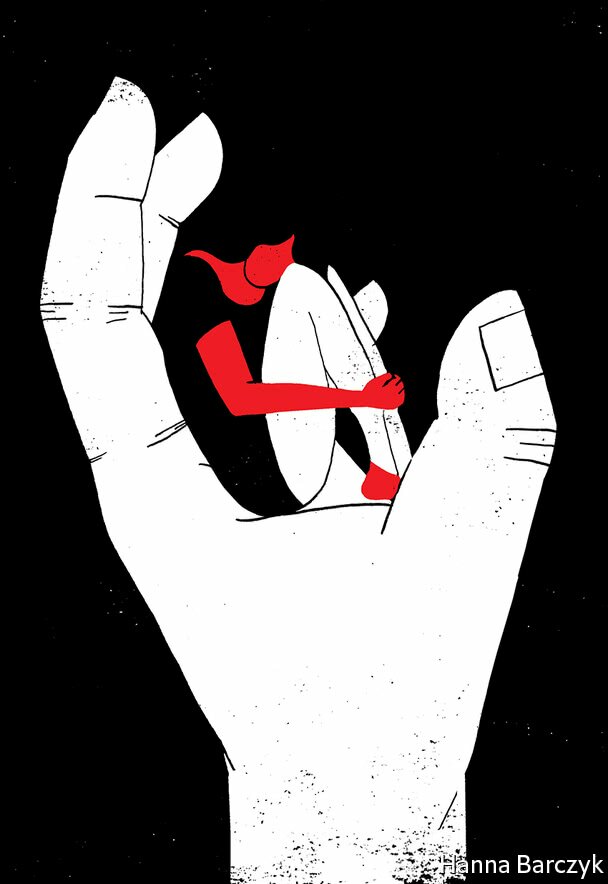
The Power of Parenting

The mare thought of home always made me melancholic and enthusiastic at the same time! This is not a strange feeling at all, I am sure many can relate. Home was and is not home without the presence of my Mum. She sure knows how to make sweet memories- from ridiculously sumptuous meals, captivating stories, therapeutic picnics, relaxing songs, blissful upcountry travels to satisfactory house chores, adventurers firewood fetching and thrilling hunting. This activities created priceless memories and inculpable emotional bond with my Mum- they are fine diamonds to me.

I did not get so much material things from my mum, maybe because we were not coming from a well off family, but still the less that I got or neverhad, I can’t compare to the moment I shared with my family. My mum was present all through my life. Greatest gift.
I was having a light conversation with a friend. She expressed to me how she felt like part of her is missing. She expressed it as an identifiable, yet indescribable absence. I asked her why she had such a sad expression. She told me how she does not have any vivid memory of her parent in her life. This was astonishing since to me, I have always believed that she had always had all support and parental care from her parents. It seems, that was not the case. She expressed the absence of her parent in her growing up. Showering her with material things (gifts, money) was what her parents did best than being in her life. They were hardly home, and if they were they were busy working, or having meetings and parties with their so called ‘friends and colleagues.’ She expressed that because of definitive choice that her parent made, she will forever have a reserved relationship with them.

We are in a generation where most parents have resorted into being material parents. Where their mode of showing affection and love is through offering gifts, money and material things. They are mostly absent in their kids life. And replace absence with showering children with material. Not like the old days, where you will have memories of your father teaching you to drive a bicycle and your mother teaching you how to cook “ugali” and bake cake. Such memories in today’s generation are rare. Children lately have memories of having Play stations, video games, basket of toys, movies and series and the list is endless.

Today, happiness and success are associated to material things. Parents use material goods to express their love to their children and also to shape their children behaviors. But what does this action leads to? They just learn to judge themselves and others based on possessions. Attaching a thing as the reward for doing something good may teach kids to think of skills as a path to material items rather than to their own wellbeing. Children also grow up into materialistic adults, who believe possessions are a sign of success.

This material attachment also extends to punishment, too. Taking things away from kids when they do something bad play a major role to them to be more insecure as adults, and that insecurity makes them associate material things with success. In fact studies have shown that people who associate material things with success and status are more likely to blow traumatic events out of proportion, and to experience depression, loneliness, and relationship troubles.

It is high time that the current generation parent should stop substituting their roles in their children life’s with material things. They should embrace their role which is being emotionally available for their children. Humans are emotional beings, and through these feelings, children can grow up differently depending on how they are brought up. Simple acts like taking an evening walk with your kid, helping them out with homework, telling them stories, listening to them, helping them solve their daily challenges among others ,create a strong emotional bond which is the key to a healthy relationship and a sober adult in future.

As much as people need money to live, and having money isn’t harmful if you’re able to separate the pursuit of money from the pursuit of experiences and fulfilling relationships, then we will be doing justice to our children.
Each time children express their gratitude, they become more aware of how fortunate they are, which paves the way for them to be more generous and less materialistic. Spend time with your children and model warmth, gratitude, and generosity to help curb materialism.

Painful truth is that parents hugely influence the type of person their children will become in the future. Frederick Douglas pointed out that ‘it is easier to build strong children than to repair broken men.’ So Parents have one time opportunity to make a good person out of their children, and that is when they are still children. It is important to be there for your children. As James E. Faust put it, ‘To be a good father and mother requires that the parent defer many of their own needs and desires in favor of the needs of their children. As a consequence of this sacrifice, conscientious parents develop a nobility of character and learn to put into practice the selfless truths taught by the Savior Himself.’

WITHOUT IDENTITY- HOW YOU CAN LOSE YOUR NATIONALITY.

It is on a Thursday evening, I have just come back from work. I have now settled down to read for my exams, which will be the next day on Friday, International Refugee law. Quite an exciting unit. I have learnt a lot in the unit from definition of what is a refugee, who is asylum seeker, the 1951 Refugee Convention, 1967 Refugee protocol on refugees, the history of refugees, and the French Protestants were among the first refugees in history… in the reading, there was a mention on a stateless person can also be a refugee. This drew my curiosity on the need to know the circumstances that leads to one being considered stateless?

I find it interesting that according to The Universal Declaration of Human Rights unequivocally states that “everyone has the right to a nationality” and that “no-one shall be arbitrarily deprived of his nationality.” But to my surprise, there are thousands of people across the globe that lack the security and protection which citizenship can provide. To add more to it, there are individuals and communities who are deprived of their nationality by governmental decree and are subsequently expelled from the country which they consider to be their home. In other situations, stateless people are obliged to flee because of the persecution and discrimination which they experience. And having left the country where they have lived for most or all their lives, stateless people may subsequently find it impossible to return.

A “stateless person” is someone who is not considered as a national by any state under the operation of its law (article 1 of the 1954 Convention relating to the Status of Stateless Persons). Here, nationality refers to the legal bond between a person and a state. This bond can best be seen as a form of official membership which confers upon the national certain rights (like the right to live in the country or participate in elections) as well as duties (like the duty of military service, where this is still in place). A person who is stateless lacks this membership and will be seen and treated as a foreigner by every country in the world. This phenomenon has also been described as “de jure statelessness”.

Nationality is almost always granted based on certain factual links between a person and a state: either links through family or through territory. To work out whether a person is stateless, it is usually sufficient to look at whether they have the nationality of any of the places with which they have such links, i.e. country of birth, country of nationality of parents, country of habitual residence and country of nationality of spouse.

Citizenship is a fundamental element of human security. As well as providing people with a sense of belonging and identity, it entitles the individual to the protection of the state and provides a legal basis for the exercise of many civil and political rights. I would call it the “right to have rights” People who lack a nationality may find it difficult or impossible to engage in a range of activities that citizens take for granted. If an individual is to enjoy the automatic right of residence in a country, carry a passport and benefit from diplomatic protection while abroad, then citizenship is indispensable. In many situations, nationality also enables people to find employment, to make use of public services, to participate in the political process and to have access to the judicial system.

An individual may lose his or her nationality and fail to acquire a new one as a result of an extended stay abroad or through marriage to (and subsequent divorce from) a person of a different nationality – a problem which affects a disproportionate number of women. Although it is the fundamental right of every child to acquire a nationality, children who are born to stateless parents or refugees – or who are born out of wedlock – may be denied citizenship.

Individuals may also find themselves stateless because of faulty administrative practices, the failure or refusal of a state to ensure the registration of births, or because of conflicts in the nationality laws of different countries, particularly when one adheres to the principle of ‘citizenship on the basis of descent’ and the other adheres to the principle of ‘citizenship on the basis of the place of birth.’ A person may voluntarily renounce their nationality and fail to acquire a new citizenship before that renunciation takes effect. In recent years it has also been known for asylum seekers to become or remain stateless by choice, so as to enhance their prospects for admission to one of the more prosperous countries.

Situations of statelessness involving larger numbers of people tend to arise in a number of different circumstances. Governments may amend their citizenship laws and denationalize whole sections of society in order to punish or marginalize them or to facilitate their exclusion from the state’s territory. The formation of new states, resulting from decolonization or the disintegration of a federal polity, may leave thousands or even millions of people stateless or with a disputed claim to citizenship. Large-scale statelessness may also arise in the context of mass expulsions and refugee movements, especially when the population concerned has lived in exile for many years without acquiring the citizenship of their asylum country. Statelessness is first and foremost a problem for states to resolve. In the refugee field, it has become an established principle that countries of origin have a primary duty to desist from actions that force people to abandon their homes and a corresponding obligation to create the conditions that will enable exiled populations to repatriate. A similar principle of state responsibility must be fostered in relation to the problem of statelessness. Above all, governments must acknowledge, both formally and in practice, that they do not have a right to withdraw or withhold the benefits of citizenship from whole sections of the population who can demonstrate a genuine and effective link with the country. Given the frequency with which governments have denaturalized and expelled their citizens, coupled with the protracted nature of so many citizenship disputes, an appeal to the notion of state responsibility might seem somewhat naive. It is therefore worth recalling that in the past few years a number of countries have managed to address the problem of statelessness in a positive manner.

In Lebanon, for example, more than 10,000 stateless persons, most of them from Middle Eastern minority groups (but not including the Palestinians) were granted citizenship in 1994-95. In the Baltic state of Lithuania, where the Russian population is relatively small, an inclusive approach to the nationality issue has given all permanent residents the opportunity to become citizens of the country. As a result, the issue has not become a matter of significant political controversy. And in early 1997, the Hong Kong authorities granted British passports to around 8,000 people, many of them of Indian origin, who were at risk of becoming stateless following the handover of the colony to China.

Despite the nationality issues which have arisen with the dissolution of Czechoslovakia, the two successor countries have largely succeeded in sorting out the affairs of the former state. What is more, this objective has been achieved in a very short period of time and in a peaceful manner – in striking contrast to the violence and mass population displacements which have accompanied the dissolution of other federal states.

Significantly, both the Czech and Slovak states have both welcomed international involvement in their nationality problems. This approach has enabled UNHCR, the Organization for Security and Cooperation in Europe and the Council of Europe to assist in a number of ways: undertaking fact finding missions; commenting on new nationality legislation; training civil servants who are responsible for citizenship issues; and assisting individuals whose nationality status is unresolved.

But then again nationality has been used as a basis of discrimination against others. So, with that, said humanity might just have to reconsider their take on nationality. This might just give humanity hope for solving the endless nationality issues and discriminations. We can borrow from Socrates who once said, ‘I am a Citizen of the World. And my Nationality is Goodwill.”

SEXUAL HARASSMENT AND SEX DISCRIMINATION OF WOMEN

It is called hustling. I am busy looking for a stable job and doing any that comes my way, just to ensure that I can be able to meet my needs. I am a casual worker for some organization. I serve as one of their sales agent. We market its products around the country. I enjoy doing it, though that is not my ideal job. I am more interested in Research and Project management, more so on matters of Social justice and Human Rights. My friend Lina (not her real name) is also sailing in the same boat with me. She is a sales agent too. Her experiences are not always pretty with some clients!

Today, Lina was working in one of the buildings in Nairobi cbd. She walked in several offices with an intention of selling her products. She get to this one office, introduce herself to the person, then she followed it up with our normal sales speech. This guy sounded or act impressed and interested with the product. But then he gets another pick up line that makes her doubt his intentions. Initially, Lina had noticed him staring at her as she was moving from one office to another until she finally reached to where his office was. So he tells her that he has a better job than what she does and he is ready to offer her so long as she meet his qualifications. “Let me hear what he has to offer” she says to herself silently. So he tells her the details of the job in question and goes on mentioning how she will earn an attractive salary, allowances that she will have and also that she will be entitled to have a company car. How great does this sound to her ears. “Hahahaha… but does it come on a silver platter?” He then goes ahead and ask her if she is free in the evening so that he can schedule for an “interview” at that time…

I thought as our society ages (I mean we are in the 21st century) it will learn to treat women better and respectfully. But I am hugely disappointed because sadly in this era women are still massively disadvantaged. Just wondering where our society is headed to! (Oh wait a minute, I am also apart of the rotting society!!) So what’s wrong with us? The problem starts with ‘you and I’ or is it ‘me and you’ (whatever it is, you feel me). What are these problems women are still facing in this century?
As a woman, you are familiar with sex discrimination and sexual harassment, right? And if you are not, then you are either a lucky one, naïve (mostly likely has experience either but has no idea) or you are living in Amazon (we all know that mythical all-female island-Amazon). What I am trying to put across is that at one point in life, every woman has most likely experienced either sex discrimination or sexual harassment or both. This is how bad it is.
To make it crystal clear to anybody who might not be understanding the above vices: Sex discrimination exists when a person or group of people are treated unfavorably solelsy on the basis of their sex. In our country, sex discrimination is illegal, which includes discriminatory treatment related to firing, pay, job assignments, promotions, payoffs, training, and benefit. (But we all know better, don’t we?) Sexual harassment in the workplace on the other hand is described as, ‘ the unwelcome sexual advances, request for sexual favors, and other verbal or physical conduct of sexual nature that explicitly or implicitly affects an individual’s employment, unreasonable interference with an individual’s work performance, or creates an intimidated, hostile, or offensive work environment. (Who still thinks that she has never experienced any of these?)

More often than you might think, ladies who are job seekers suffer most. They are most of the times forced to tolerate the indecent and pathetic behavior of their potential employers, in the name of securing a job, sad! This may range from interviews at odd time or places (I mean who in his proper mind schedules an interview late in the evening or on a weekend at his home?!!!!), making direct sexual advancement (this is the most creepy of them), asking for sexual favors in order to merit a chance (yak! Disgusting) to frequently calling and messaging you asking you out for dates ‘innocently’ they say (I mean how stupid do they think we are!). At the end of the day you are exhausted, stressed or depressed, almost or regretting being a woman sometimes.

Don’t get it twisted folks, some breeds of ladies actually use sexual favors as a means of getting what they want even if no advances are made on them. (May God forgive as our trespasses, why would someone demean herself this way to the levels of a ‘dog’?). Some ladies fall into this trap maybe because they are too weak or they cannot persevere due to the challenges they face in life. No need to judge, but what are you depicting to your bosses! You are literally telling them that you don’t respect yourself and you are always available to be used sexually. With that said, you would most probably be abused throughout your work time in that place, and sadly you would not have a say.

The most hurtful of them all comes when your boss or senior workmate acts as a ‘friend.’ He earns your trust, you even consider him as a mentor but he is no different. He is a wolf dressed up in a sheep’s skin. Then you realize all this was to blind you from his dark intentions. It always ends up badly when you are confronted with the ugly truth. It’s important to take care of yourself, be in control of your life, and don’t let anyone press the buttons for you.
How many women are turned down just because they are women? That the tasks they seek are not for women. Makes me wonder, are women not competitive or is there something wrong with being a woman? Sadly, such mentality seems rooted so deep down in our culture that even we women sometimes find nothing wrong with it. In fact we might willingly reject job offers regarding them as masculine jobs, that’s how bad it is. As a woman, you have the right to pursue a career you like regardless of the nature of the job.

Which kind of a human being mocks or even dismiss a pregnant woman just because she is expectant? This is very sad, in fact I cannot stand the site of such a person. An Expectant lady is the most beautiful thing you can ever see and admire, she is giving life. She deserves tender care and loving, and above all, respect from everyone. Mistreating a lady just because she is pregnant at the workplace is not just very wrong but evil in its nature. The same applies to lactating mothers, they should be allowed to freely breastfeed their babies without fear of being judged.

We women as much as we are the victims here, it looks like we are also making the situation even worse. Why am I saying this? How many women do report sex discrimination or sexual harassment? My answer is very few, in fact a very small number! Most of the cases they opt just to tolerate the behavior (this is a very bad idea) or are afraid to act. By doing so, men get motivated in doing so, they will continue harassing with no fear. If this is to stop, we must stand up for ourselves and our rights. We must protect our dignity and demand to be treated with respect. But this can only be possible if we also treat ourselves with respect and dignity.

To those men out there who enjoy harassing women, my question is; would you like your mother, wife, sisters or daughters to be treated the same way that you treat other peoples’ mothers, wives, sisters and daughters? I am pretty sure you would expected them to be treated well. That will only be possible if you stand up for them, first by treating women better and second for standing for women’s rights. This is not only a women affair but men’s too. Men should be at the forefront in this fight because your daughters, wives, sisters and mothers depends on your action!!