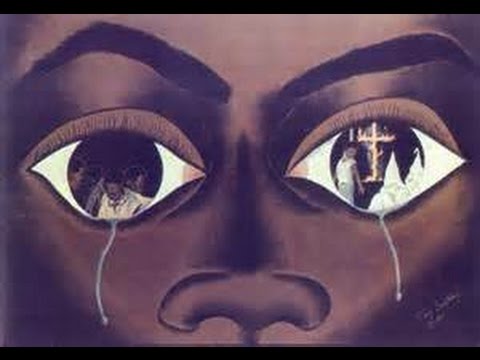
THE BEAUTIFUL MONSTER- UN’S SUSTAINABLE DEVELOPMENT GOALS(SDGs) 

There I was, seated innocently and curiously listening to the ‘powerful’ and captivating speeches by the guest speakers. However, I was rather fuzzy, the speakers seems so deep down into the SDG’s (Sustainable Development Goals) ; was not sure either to be impressed or skeptical. Back at home, I hardly hear this topic being discussed in fact, most people do not even know what SDG’s is all about!

We had travelled hundreds of miles from Nairobi, Kenya to Arusha, Tanzania to represent the youths of Kenya in the Tanzania National Youth Assembly. The event which was aimed at engaging and equipping the youth with capacity building skills that promote Education for peace and Sustainable development, was organized by Vijana Assembly in partnership with UNESCO/MGIEP and the YESPeace Network.

Let’s be realist here folks, there is a probability that the person reading this has not come across SDG’s or has never taken or taken little interest in knowing what it is all about. This is despite the fact that most of the world’s activities are getting aligned with the SDG’s. But hey, this is your lucky day, I am going to give you a brief summery about SDG’s, just enough for basic knowledge. 

Below is an extract from UNITED NATIONS DEVELOPMENT PROGRAMME website on what SDG’s entails(I hope it will be helpful in making you digest this issue…):-

“The Sustainable Development Goals (SDGs), otherwise known as the Global Goals, is a universal call to action to end poverty, protect the planet and ensure that all people enjoy peace and prosperity.

These 17 Goals build on the successes of the Millennium Development Goals, while including new areas such as climate change, economic inequality, innovation, sustainable consumption, peace and justice, among other priorities. The goals are interconnected – often the key to success on one will involve tackling issues more commonly associated with another.

The SDG’s work in the spirit of partnership and pragmatism to make the right choices now to improve life, in a sustainable way, for future generations. It provide clear guidelines and targets for all countries to adopt in accordance with their own priorities and the environmental challenges of the world at large. The SDGs is an inclusive agenda. It tackle the root causes of poverty and unite us together to make a positive change for both people and planet. “Poverty eradication is at the heart of the 2030 Agenda, and so is the commitment to leave no-one behind,” UNDP Administrator Achim Steiner said. “The Agenda offers a unique opportunity to put the whole world on a more prosperous and sustainable development path. In many ways, it reflects what UNDP was created for.”

I think now were are on the same page, if not, feel free to read compressively on SDG’s for a wider and boarder understanding. One thing you’ll all agree to is that, SDG’s sounds fancy, flashy or rather overambitious. They look good in paper but the question is, are they achievable? Are they really inclusive as said? Are they really workable in developing countries? Are they realistic?

It’s everyone’s prayer and hope that SDG’s to be achieved as speculated, but they cannot and will not be achieved with business as usual.  These goals makes me feel nostalgic for MDGs (Millennium Development Goals). So why am I so skeptic about something that looks so beautiful?

For a start, it is important to note that core of the SDG’s programme for development and poverty reduction relies precisely on the old model of industrial growth. There is a big problem in this model since it not harmonizing rapid industrial growth with the commitment to hold global warming below the 2° Celsius threshold, and calls for “sustainable patterns of production and consumption.”  Goal 8 calls for 7% annual GDP growth in the least developed countries and higher levels of economic productivity across the board. At this rate, it is expected that the environment will feel the pinch. As you read, global production and consumption levels are overshooting our planet’s capacity by about 50% each year. Yet the SDG’s offer nothing but superficial responses: reduce food waste, make resource use more efficient, and “encourage companies to adopt sustainable practices.”  These proposals explicitly sidestep the only real solution, which is to reduce over-consumption by the World’s wealthy.

We are all familiar with the raise in GDP in our country, yet life seems to even get more difficult to the common citizen. In simple terms, such growths do not necessarily reduce poverty.  While global GDP has grown by 271% since 1990, the number of people living on less than $5 a day has increased by more than 370 million. This makes me question why SDGs rely on growth as a poverty-reduction strategy. It clearly doesn’t work! Is it because the prospect of growth allows our leaders to sidestep the challenge of having to distribute existing resources more fairly? According to statistics, on a best case scenario with this strategy it take about 207 years to eliminate poverty with this strategy. And to get there, we will have to grow the global economy by 175 times its present size.  This is obviously a terrible strategy: even if such immense growth were possible, it would drive climate change to catastrophic levels and, in the process, rapidly reverse any gains against poverty.

Has it is clear the growth is not in any way the solution to eradicating poverty. So what is it? One issue that SDG’s is openly ignoring is the widespread inequality. The silent speaks volumes and its deafening! Surprisingly, only real alternative is to reduce the enormous inequality that marks our global society, where the richest 1% own half of the world’s total private wealth. Yet SDG’s is not any way addressing this issue! It makes me question if Developing Countries really made a contribution to formulating these goals, because as it looks they had insignificant, little or no contribution since this would be the major agenda. It is important to note that, the SDG’s initially included two other targets on equitable sharing of global resources, but US negotiators eviscerated them last month in a last-minute backroom decision. Thus yet another monumental global challenge has been handed down to the next generation.  This betrayal is the subject of an open letter to the UN that has been signed by Noam Chomsky, Naomi Klein, Thomas Pogge, Chris Hedges, Eve Ensler and other powerful voices. It looks like rich and developed countries are protecting their interests at the expense of poor and developing countries in the name of SDG’s. What’s the sanity in all these?

Poverty, poverty, poverty! Is what we as a society has been trying to eradicated. It all started with MDGs and know SDG’s. Ironically, SDG’s offer little solution on the known global drivers of poverty! Makes me question why we even have the goals if they can’t address the major issues. They say nothing about the unfair trade regime of the World Trade Organization, or the many bilateral trade and investment agreements that liberalize global markets at the expense of the poor. In fact, instead of tackling this crucial issue, Goal 17 subjection 10 calls for more trade liberalization and more power for the WTO. And instead of demanding an end to the financial speculation that has caused food prices to spike since 2007, pushing 150 million into hunger, the SDG’s ask that we “ensure the proper functioning of food commodity markets.” It’s not clear what this means, but it can easily be interpreted as yet more liberalization, which is what caused the food crisis in the first place. They refuse to call for debt cancellation even though debt service drains developing countries of more than $700 billion per year – money that could be directed instead toward poverty reduction.  On the contrary, clauses inserted by the EU in yet another backroom deal ensure that borrowers shoulder full responsibility for over-indebtedness. This are just but few examples, SDG’s will not end poverty until it tackles real issues.

In the SDG’s proposal to end extreme poverty, it is evident that they are still stalk to measuring poverty level at only $1.25/day! This is despite of the fact that a growing number of scholar have and are pointing out that $1.25/day is not adequate for human subsistence. A number of recent studies suggest that if people are to achieve normal life expectancy and meet their basic needs as outlined in the Universal Declaration of Human Rights, they need closer to $5 per day. So having the measurement at $1.25/day will give a miss-measurement of poverty levels, giving the false pretext that we are achieving the goals yet we are not even close. If we measure poverty by the more accurate $5/day line, the total poverty headcount rises to 4.3 billion people, more than 60% of humanity. This is alarming. What’s is SDG’s really addressing?

The SDG’s aim to leave no one behind! That is very sad because poor and developing countries will even be far much behind by 2030 when the goals expires, what then?! It would be a waste of several years trying to chase fancy ideas only favoring a few rich countries. For African and other developing countries, we need real and realistic programme, policies and strategies to develop our countries least we remain in the same state. During the first UN summit on SDG’s in New York (2015), a quote by Ban Ki Moon- “Some 8.5 million people have made their voice heard to the United Nations” — left me perplex, who are these 8.5 million people because last time I remember we (developing countries) have little or no influence on the j of SDG’s yet it’s made to look like it focus on “them”.Sad!

Negative Ethnicity- “A divided Nation”

He couldn’t brush off the feeling, was he anxious, scared or just paranoid? Honestly I can’t tell, but one thing I am sure of, is that his stomach felt like it turned upside down. Even with several people around him, he felt lost and lonely. Throughout the seemingly heartful conversation in the matatu, he couldn’t understand a thing a part from occasionally hearing the names of famous politicians and specific ethnic communities mentioned. Judging from the current state of affairs in our dear country Kenya, he was determined on hiding his ethnic background due to the fear of being negatively profiled or ‘worse’. When he had to pick a phone call, he was left with two choices; pick but speak in Swahili or English (not foolproof due to his strong ascent), or just ignore the call all together to avoid unnecessary attention. The second option was the best, in fact pretending to be asleep throughout the entire journey was an innovative idea- just in case one of the passengers tried to engage in a conversation with him.
How did we reach here? A situation where you are insecure in your own country! An era where it is not an option to freely express yourself with ease! A country where most citizens are afraid to travel, stay or speak their ethnic languages in parts of the country they are not ‘affiliated’ to! A state where your character and behavior is judged and determined by ethnical stereotyping! A time where your chances of successes are correlated to your ethical background! A society where some cultural practices are considered superior to others! A nation where intelligences, wisdom and knowledge can be link to certain ethnic communities’ rite of passage! A democracy where some people are more equal than others! This is a broken nation where love, peace and unity are just experienced in writings not in real life. Last time I remember, this was Kenya but it’s hard to tell now! So as we always put it, where did the rain start beating us?

Elections has been a good platform for Kenyans to hide on unleashing their tribal rivalry. They hide under political parties and their ideologies to practice negative ethnicity. I find this to be so sickening, because even my educated brother and sister from both the Agikuyu, Kalenjin, Luo, Luhya… mention others, are in the fore front in doing this. You will of course notice through their twitter and Facebook posts. They are also confident enough to even do it in public, where they will openly discriminate, insult, catalysis conflict at times be part of the conflict. This is clearly the elite in our society. Education has impacted no value in them.

Negative ethnicity informs and guides our politics, religions, business, thinking and what we talk either on social media or on our everyday interactions. I am just here yearning and advocating for the time that Kenyans will be ethnically sober and STOP embracing the demon of negative ethnicity.

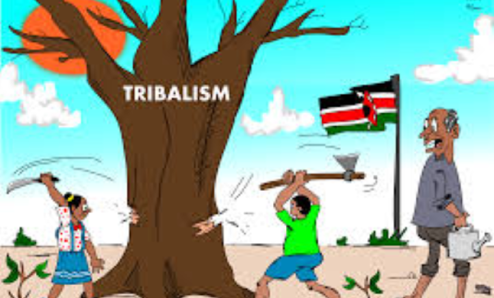
My apologies, my bad. I forgot to define the term negative ethnicity, this is the hate of people based on ethnical or tribal difference. It is the rejection of humanity and leadership from other ethnic groups. Its purpose is not self-preservation but rather discrimination and demonization of others.

Negative ethnicity is the most potent weapon of mass self-destruction in Africa. Just in the past 4 months in Kenya, it has claimed a significant number of lives. This because of utterly hatred that it comes with it. Kenyans regard tribal differences as enemies and traitors. 

It is recorded that since Independence of African states, Negative ethnicity has killed over 10.8 million people. Ethnic genocide killed approximately 1 million people in Rwanda, 2 million in Sudan, 2 million in Biafran war in Nigeria, over 2.5 million in Democratic of Congo, 20,000 in South Africa, 100,000 in Algeria, over 1 million in Somalia 200,000 in Burundi, 1 million in Angola, 800,000 in Uganda, 150,000 in Liberia, 50,000 in Sierra Leone and over 1300 in Kenya. Comparatively, atomic bomb killed 100,000 people in Hiroshima and 40,000 in Nagasaki.

I was surprised the other day when I read a post of a friend on Social media, that this ethnical violence are stage managed, and it is not reality.  Is this what I should refer as denial of the practice? Are we waiting for the Kenyan case to explode as it did in 2008 South Sudan case or even the 1994 Rwandan genocide? Just the other week when I was on my field work, I came across a group of Young men, they seem to be at their 30s, they were condemning one of the Kenyan tribe and even swore to kill them. I was so frightened, scared and disappointed, this is the extent of the hatred Kenya has based on ethnic difference. 

Un-knowingly this is how negative ethnicity escalates to ethnic wars. It first wins hearts and minds of the people becoming the ideology of the communities, politics, parties and elections. Second, it works closely with the Machiavellian principle of “the end justifies the means”: If negative ethnicity will give you job, power, land, money, tender or even business, why not practice it. Third, negative ethnicity reserves all positions of leadership to only their tribal alienation. Under the notion that all good leaders come from their tribe and all the other bad leaders come from the other ethnic group. Fourth, it takes government captive and uses it to unleash ethnic mayhem. Once the government has embraced it, it only destroy and never develop the people and the country. Fifth is that, negative ethnicity is a key protector of corruption, which in turn uses resources for self-perpetuation. 

Our differences should not be a source of discrimination and intolerance but a source of strength, beauty and pride. We need to curb ethnicity, no generation needs this. Mamur Mustapha puts it, “we’ve rigged the entire system of living in harmony with nature against ourselves. We raise our children and inculcate various “isms” into them. They in turn perpetuate it by passing the same (if not more) onto their’s. We raise slaves, not independent thinker.”

imprint of global immigration

An alien, that’s now your legal name, a term you grew up knowing it only referred to those ugly extraterrestrial creatures with ill motive of destroying or conquering the world, at least that’s what Hollywood taught you. How did you get here? There is always a captivating story behind every single immigrant.

Meet Kasir (not his real name) who has been forced to flee his country due to political instability which has claimed the life of his parents and siblings. He is only 16 years old and had to trek hundreds of miles with limited food and water to get into a refugee camp in a neighboring country. What does the future hold for Kasir now that everything is seems all lost to him? Kasir’s story is not unique as this has been the case in Rwanda, S.Sudan and it’s the norm in the Middle East.

The grass is always greener on the other side, at least that’s according to Lilian (not her real name). The promise of a greener pasture drove her off her country. She has already conformed to the trends and culture of her host country. I wonder if she like it here, and does she live the life she anticipated? Immigrants in such for better economic empowerment in other countries are found in many countries all over the world.

Then comes Fatuma (not her real name), she has been staying in a foreign country for three years now. This is all in the name of better education and exposure. She believes that this is the best opportunity for her to pursue and advance in her education, better than she would have done back home. Who wouldn’t wish to secure a chance in a prestigious university a broad? Many like Fatuma leave their county to quench their thirst for knowledge in other countries.

Demographic factors, economic disparities and environmental changes are the major drivers of migration: This is a mixed migration flows. It consist, refugees, asylum seekers, regular and irregular migrants. Migration has both positive and negative impact to us and our society. Negative migration involves human trafficking, kidnapping of vulnerable refugees and migrants, torture, abuse of female refugees  and migrants, a shrinking protection space for refugees and migrants dying  while crossing the Sahara desert to Libya, the Gulf of Aden in Yemen, or the Mediterranean Sea to Italy. Positive migration can be effective in poverty reduction strategy and has many beneficial effects for countries of origin, destination countries and for migrants themselves.

Migrants fill gaps in labor markets, send billions of remittances to their countries of origin, pay taxes, and stimulate trade and transfer technologies skills and ideas. People from the poorest places gaining the most. International migration reduces poverty at the family level. International migration positively contribute to human capital formation, migrant remittances multiplier effects in rural economies and can thus contribute to economic development. Education and healthcare receive high priority in the spending of remittances.

In the United States of America, evidence suggests that immigration leads to more innovation, a better educated workforce, grater occupational specialization, better matching of skills with jobs, and higher overall economic productivity. Immigrates have kept the level of innovation high in this country judging from the fact that in the last decade several multibillion dollar companies from Tesla to Pfizer have been founded by immigrants.

Japanese reluctant to accept immigrants (apart from very highly skilled personnel) seems to take a toll on its economy. Its economy to recession,  and maybe immigration into the country might just be the solution. Japanese population have been shrinking,  translating to fewer workers,  fewer consumers, and less overall demand, all while a growing elderly population puts strain on government budget. A fresh influx of labor force into the country may save the economy by providing increased labor (both skilled and Non-skilled) to supplement the already depleted labor force,  and to also improve the innovative new of the Japanese people through acquisition of knew knowledge and skills. 

Public perception seems less convinced on the positive effects of migration. Anti-migration is common in them. What has led to this the negative rhetoric that is often used in media coverage and comments on migration. Some of the unsubstantiated myths on social and security risks of migrants include; migrants migration imports ethnic tension, migrants are potential terrorists or pose health risks to the society, refugees and migrants are disproportionately involved in criminal activities.

Despite the fallacy spread by both main stream media and social media that immigrants in the United States of America are the reason for high level of insecurity and terrorism in America, research has it otherwise. According to Nowrasteh’s   analysis, over the past 41 years (from 1975-2015; the chance an American would be killed by a foreign-born refugee terrorists is 1 in 3.64 billion per year; the chance of an American being murdered by undocumented immigrant terrorist is 1 in 10.9 billion per year; the chance of an American could be killed by a terrorist on a typical tourist visa was 1 in 3.9 billion. This is to include the fact that there hasn’t been a single American killed by terrorist from one of the seven countries (Iran, Iraq, Libya, Somalia, Sudan, Syria, and Yemen) includes in the President’s travel ban.

Immigration has been the major driver of advancements and civilization for millennia. The movement of people from one place to another, has led to the sharing of ideas and knowledge which has been integral in human survival and improved lifestyle. Just as Lyndon B. Johnson quoted in regards to America’s Greatness—“The land flourished because it was fed from so many sources-because it was nourished by many cultures and traditions and people.”— is an indicator of the importance of immigration to the society.

The True Path to Peace

What is peace? In simple terms, it is freedom from disturbance; tranquillity. Therefore, the quietness one experiences while concentrating on a test or just relaxing on the warm sand in Watamu beach, all qualify as peace. My mum’s response when I asked her about what peace really is, changed my entire view of peace. She said that peace has many definitions. One definition of peace is the end of violence. Another definition of peace is to never use violence to show your emotions. She also asked me if I have ever thought of peace as an effective weapon against violence.

In a country or state, Peace is a term that most commonly refers to an absence of aggression, violence, conflict or hostility. However, Peace isn’t necessarily the absence of conflict but rather the presence of justice, and the ability to handle conflict in a peaceful means. Despite the occasional arguments, misunderstandings or disagreement we always experience in our families, most of us consider being with our families very peaceful.  In a society, peace happens when different desires are in one agreement. Peace is based on many things, culture, education, family values, experience, and history (to name a few) but the basis is the same–to co-exist without war, killing, & overpowering a fellow being.

According to me, Peace is the feeling that all’s right with the world. When everyone around me in my family, my friend circle and my neighbourhood are happy, eager to love, accept and relate… I feel at peace. Also, to me it means following what my heart says and sharing mutual trust and respect for people around me. The willingness to solve our conflicts, and not only be tolerant but also appreciate one another’s difference, is peace.

However, in today’s world, peace and harmony face various threats. Terrorism, regional imbalance, economic disparity, and social inequality are some of the factors which threaten peace today. Solving these issues is the key to a peaceful society, otherwise just preaching peace without real action is like playing a guitar to a wild goat expecting it to dance to your tune, it wouldn’t work. We all are so engrossed in our busy lifestyles and yet want our lives to be peaceful. We expect that peace to be omnipresent but what we need to realize is the fact that if we want peace- we have to live peacefully, love everyone, forgive, forget, etc.

It’s not enough to stand around asking if world peace will ever happen, because that won’t make any impact. Actions speak louder than words. If everyone starts living peaceful, in loving way, things will change. But someone has to start and lead by example. Mahatma Gandhi once said “You must be the change you wish to see in the world.”

We can’t rely on anyone else to do this. We have to do these ourselves. It all begins with respect for self and your neighbour. Being selfless is a good progress, don’t stand your neighbour going hungry, sick or with no shelter. Creating equal opportunities for everyone and at the same time being equitable is a good progress towards a peaceful coexistence. The moment free, transparent, fair and credible processes are compromised, then peace will not prevail however aggressive we may try to advocate for it.

Acceptance, compassion, and tolerance are the foundation of peace.

Mahatma Gandhi showed that peace ends suffering and oppression, not by warring against an enemy but by bearing witness to wrongs and allowing sympathy and common humanity to do their patient work. Nelson Mandela and Mother Teresa lived different aspects of peace, which was proven to be a viable way to achieve great things. It is possible to have a fake or plastic peace in a society, the dangers of this is that it is bound to fail because the anger, hatred and grief hidden deep down in the people is like a petrol bomb, just waiting for an ignition to explode, the aftermath will be catastrophic. So it’s important to own our past however dark it way be and not burry it, so as to learn and prevent a repeat of such vices. And also factor in accepting and solving the past injustices. This is the only way to achieve real reconciliation and a path to peace. Let’s not live under a pretext of peace which is not sustainable and healthyssss.

“When the power of love overcomes the love of power, the world will know peace.” Jimi Hendrix: Think about it.

TRANSATLANTIC SLAVE TRADE: THE AFRICAN REGRESS.

SLAVE TRADE 2

In my previous post I mentioned that divide of Africa might not be the cause of Africa misfortune. This has kept me thinking what the causes are/ were. “Can Slave trade be one of the major causes of this misfortune?” I wonder.

In 2015, I was privileged to work with an organization known as HAART Kenya, whose main purpose is working to end human trafficking in Kenya. They refer to it as Modern Slave trade (story for another day). Over the period there, I was exposed to what slavery is and what impact it has in our society.

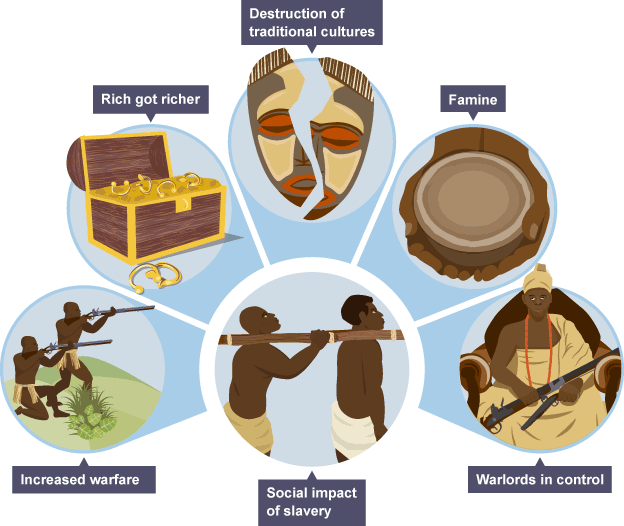
The Trans-Atlantic slave trade radically impaired Africa’s potential to develop economically and maintain its social and political stability. Why do I say so? This exchange triggered a continuous process of exploitation of Africa’s human resources, labor, and commodities. This exploitative commerce influenced the African political and religious aristocracies, the warrior classes and the biracial elite, who made small gains from the slave trade, to participate in the oppression of their own people.

Way back in the 15th to 19th Century, All of us were not born. Our history records, Young energetic men, children and beautiful women being taken away by force to Europe. In exchange of few goodies for the selfish. Just the act of self-interest and greed by few individuals, led to the impaired-ness we are currently facing.

At least 12 million African men, women and children were forcefully transported in bondage to the Americas, within a three and a half century period. This was the trans-Atlantic slave trade which represented one of the longest and most sustained assaults on the very life, integrity, and dignity of human beings in history. This is due to the fact that the slave trade was brutal and horrific, and the enslavement of Africans was cruel, exploitative, and dehumanizing. The trans-Atlantic slave trade laid the foundation for modern capitalism, generating immense wealth for business enterprises in America and Europe. While the trade was contributing to the industrialization of northwestern Europe and creation of a single Atlantic world that included western Europe, western Africa, the Caribbean islands, and the mainland’s of North and South America, it left Africa bleeding and broken.

The mid seventeenth century marked the climax of the slave trade, which was at its most intense phase. This was as a result of the creation of ever-larger sugar plantations and the introduction of other crops such as indigo, rice, tobacco, coffee, cocoa, and cotton in the Americas.  This large plantations needed a lot of labor which could not be sustained by the few slaves and the natives, therefore, salves in large numbers were acquired and taken to Americas. Some slave traders – often well-respected men in their communities – made fortunes for themselves and their descendants. The corresponding impact on Africa was intensified as larger parts of west and central Africa came into the slavers’ orbit.

Trans-Atlantic slave trade caused a heartbreaking and detrimental effect to the Africans—the mere fact that Africans were raiding their fellow Africans, to capture them as slaves, and forcefully hand them over to European slave colonies in form of trade—This sad vice lead to ethnic fragmentation of Africans. Hostility among neighboring villages, communities and states escalated since they raided each other, capturing men, women and children to trade as slaves in exchange for arms and other commodities. The previously established codes of conduct (concerning warfare)–meant to create peace– were abolished, heightening levels of insecurity. Social interaction was highly compromised following high levels of insecurity among various social groups, and this led to confinement of populations within their respective ethnic boundaries and groups. Due to the rising incidences of conflicts, suspicion and banditry, arising from trans-Atlantic slave trade, there was destruction of almost all the village networks and federations, that had been created before, in the 19th century (Curtin 198).

 We are all very familiar with the consequences of insecurity, it causes fear, an emotion which must be acted upon. The high demand for slaves by the European colonies exerted lots of pressure on the African communities, thus leading to conflicts and even catastrophic war among these communities.  As a result, African States were weakened and fragmented. These African communities had to protect themselves from attacks by other communities, thus resorted to arming themselves with weapons available that time like knives, swords, firearms and spears. The only complication was that these weapons could only be acquired from the European colonies, and through the exchange of slaves! Yeah! You get the picture. The only way to arm and protect yourselves from attacks from neighboring communities was to attack your neighboring communities to capture slaves, and trade them for weapons! Everything seemed wrong with this, defending evil with evil leading to more evil! This escalated slave trade and created much more hatred between African states, due to the act of enslaving one another for security and protection. One good example in the 19th century was the Kabre community of Togo; which engaged in delivering of their own kin to European colonies in exchange of iron knives, and spears for defense (Curtin 184).

What followed was political instability, it’s pretty simple, what would the weakening and fragmentation of African States result into? If you think this time fell short of conspiracies and evil plots which would only be possible in the modern times, you are wrong. Europeans with their Africa partners intentionally caused political instabilities in most African states for their own benefits. They participated in intervention of various political processes so as to create internal instabilities and conflicts as this translated into more slaves for them. The raiders and merchants of slavery formed alliances with various groups in villages and States purposely to get slaves. Since most of the community young men were frustrated by the fact that power was under control of elderly men, they readily made alliances with these merchants to extract slaves. This actually led to increased political instability, internal conflicts and ultimate weakening of the States. Most of the pre-existing forms of government collapsed due to internal conflicts and increased political instability. For instance, the weakening of political institutions domestically occurred within the West Central Africa’s Kongo Kingdom, where the local Kongo citizens were kidnapped in early 1514, and handed over or sold to Portuguese slave merchants. This scenario became rampant with time and created lots of social and political disorder, leading to collapse of the entire Kingdom and the King’s authority (Curtin 198).

Criminals were good news to the slave merchants since they automatically qualified as easy take as slaves without a break of sweat. For this reason therefore, they resorted to using false accusations against individuals for community crimes like the dreaded witchcraft to criminalize many individuals. Majority of African communities had a well-established judicial and punishment penalties for such crimes at this time. However, these merchants took advantage of this system to convert the penalties into enslavement. Examples of some converted penalties included but not limed to: ex-communication from the community, beatings, compensation, and exile (Nunn 153). As a result, those who were falsely accused automatically become enslavement candidates. This practices subsequently resulted into deterioration of the established legal institutions due to abuse of the judicial system, with leaders supporting this tribute to protect their communities and themselves. A good example was the Cassanga chief, who engaged in punishing the community members by giving them poison. Those who took the poison and vomited were pronounced guilty and immediately sold to slavery merchants. For those that failed to vomit, they actually faced death due to poisoning. Their family members, who had remained behind, were then manipulated, seized of any available property and handed over to slavery merchants for shipping. It is these kinds of acts that led to total deterioration of the legal systems, which had been put in place prior to occurrence of the trans-Atlantic slave trade (Nunn 167).

What would you do if you are living in a place close to where dangerous criminal dealings occur? The most logical act is to move away as far as possible due to the fear of being a victim of their criminal activities. This is exactly what most African communities opted for, fleeing. The slave merchants had various distinct routes which they used to transport the slaves they had raided and capture to the coast, where they were gathered, branded and shipped. Majority of communities, which were living along these particular routes, were forced to migrated and flee for the sake of their safety since they were vulnerable to attacks. This unwanted displacement of these communities subsequently resulted into abandonment of various activities, projects and investment opportunities. People had to abandon their lands and farming activities, this impacted agriculture to a great margin as an economic activity. This led to DE-stabilization of many economies of the Africa States during the entire period of the slave trade (Engerman 64). 

 Trans-Atlantic slave trade was the black plague to Africans. What good could possibly come out of a practice which involved humans treated worse than animals? Many Africans met their deaths due to this slave trade in the course of its entire period. Impacts of slave trade like conflicts, inter-ethic fragmentation, political unrest, and other forms of disorder, led to many killings, which saw many innocent Africans, lose their lives. A part from those who were killed during raids and wars in pursuit for slaves, many more Africans, who were captured and transported to the coast for shipping also died on the way due to ruthless handling, merciless beating, and excessive use of force. The colonies inside Africa also started fighting against each other over slaves, thus leading to massive killings. It is these massive killings that led to stagnation of the population of Africa, nearly for the entire period of 19th century (Engerman 87).

Frequent raids, conflicts and displacements caused be trans-Atlantic led to loss of lots of property. In some cases an entire village was torched to the ground by raiders and people held captive leading to loss of millions worth of properties. In fact, those who were raided and captured had their property destroyed, or taken away, by other powerful members of the society, without seeking permission or clarification from the immediate family members (Whatley 82).

Summing up all the above effects of trans-Atlantic slave trade, they all contributed to a grand effect. Economic development in most of the African States stagnated due to these effects of slave trade, this was majorly due the fact that quit a number of African human resource was lost slave trade. Human resource is the most importance resource when it comes to production and development of economy. Some states thrived in wealth amassed from slave trade which become a lucrative economic activities which also led to dependence on European goods, since other economic activities become unpopular or even abandoned. When slave trade was finally banned by Britain and United States, the African states which thrived on slaves collapsed and become vulnerable to conquest and colonization. The Europeans firearms fueled war and instability which continued to this day.

Trans-Atlantic slave trade was a contributor to the racism ideology. Most African slavery had no deeper reasons than legal punishment or tribal warfare. But the Europeans who preached a universal religion of Christianity, who were against enslavement of fellow Christians, needed a justification for a practice which was obviously against their beliefs and ideology of equality. So in order to justify the enslavement of the Africans, they claimed that Africans were biologically inferior and were destined to be slaves. For this reason therefore slavery in Americas attained a racial basis, thus making it impossible for the slaves and their future descendants to gain equal status in the society.

In conclusion, it is obvious that Trans-Atlantic trade is likely to be one of the major causes of African misfortune that I have indicated above. The question now is, what should we do to rectify this damage which trickles down to date?

SLAVE TRADE 1